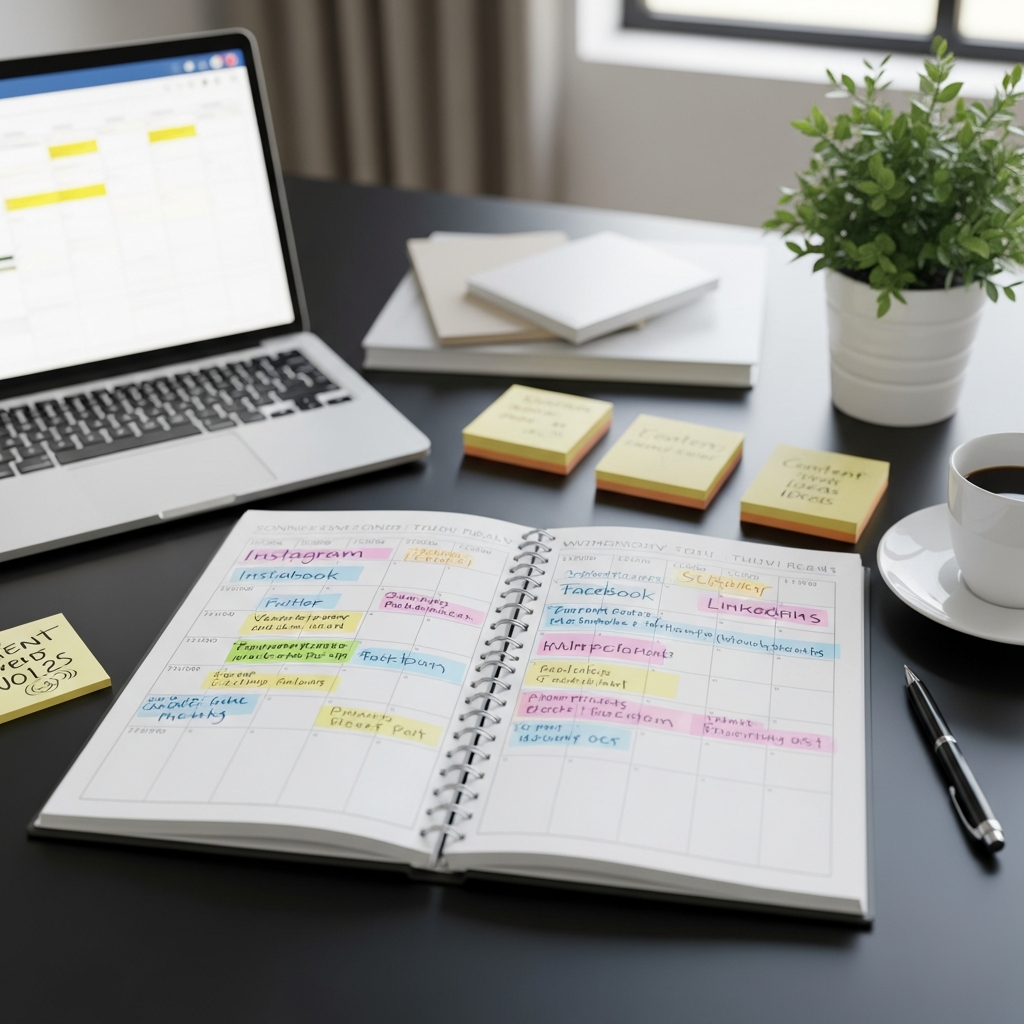
From Zero to Consistent: How to Build a Social Media Posting Schedule That Runs Itself
TL;DR
Consistency beats intensity in social media, and building a repeatable posting schedule you can actually keep is what grows your reach over time.
- Pick a posting frequency you can sustain, like three posts a week, instead of a daily pace you abandon after two weeks.
- Use your own analytics to find when your audience engages, then let your real results guide your timing rather than generic charts.
- Give each day a loose theme and keep a running idea list so you never start from a blank page.
Why Your Business Needs a Posting Schedule
Sticking to a posting schedule sounds simple until you actually try to do it while running a business. You know showing up consistently helps, but finding the time between serving customers and keeping the lights on feels impossible. Most owners start strong, post for a few weeks, and then life takes over and it all falls off. That stop-start pattern is what quietly hurts you, because peopl
A real schedule fixes that. Instead of scrambling for something to post every single day, you write a batch of posts ahead of time and let them go out on their own. The platforms tend to reward accounts that show up regularly, so a steady rhythm helps your reach on its own.
When your posting schedule is all over the place, your reach suffers and the businesses down the street who do show up steadily start to pull ahead. Consistency is the thing that builds the relationship over time, and it is a lot easier to be consistent when you are not starting from a blank page every morning.
Setting Up Your Content Calendar
Start by figuring out when your audience is actually online. Your existing analytics will show you the peak times. For most local businesses that tends to be around lunch and in the early evening on weekdays. Look at a few months of data, not just last week, and watch both reach and how many people actually engage. Lots of reach but few responses usually means you are posting at the wrong time.
Rewriting the same post for every channel eats your week. AutoMarketer AI adapts it and posts on autopilot.
Get Started Free →Pick a posting schedule you can actually keep up. Three posts a week you stick to beats daily posting you quit after two weeks. Start small and add more once you have a system. Block off time each week for content and treat it like an appointment you would not cancel. Doing it all in one sitting, captions, images, scheduling, saves you a ton compared to doing it piecemeal.
Give each day a loose theme so you are not deciding from scratch every time. Maybe Monday is a tip and Friday is a behind-the-scenes look. A simple week might be one helpful tip, one story, and one offer. Keep a running list of ideas under each theme so you always have somewhere to start, and leave a little room for anything timely that comes up.
Tuning It for Each Platform
Every platform has its own quirks about when and how to post, and the specifics shift constantly. The honest answer is that the best times for your audience are the ones your own analytics show, not a number from a generic chart. Use the platform’s own guidance as a starting point and let your real results steer you from there.
A few things hold up pretty well across the board. Video tends to do better than a plain photo or a shared link right now. Posts that invite people to do something, like a quick poll or a question, usually beat posts they just scroll past. And when a platform rolls out a new format, the people who jump on it early often get a little extra reach for a while.
One idea can stretch a long way. A single strong thought can become a longer post on one platform, a photo post on another, and a short punchy version somewhere else. Keep the core message the same and just adjust the tone to fit where it is going. Same colors, same logo, same voice across all of them, so people recognize you at a glance.
Content That Practically Writes Itself
Build yourself a few templates you can reuse. A “tip of the day” format is easy to fill in over and over, and a customer spotlight gives you a repeatable way to show off happy clients. Batch the similar work together, write all your tips for the month in one sitting, do your photos in another. You will get more done and it will come out better than scattered daily effort.
Keep a running list of ideas pulled straight from your day. The questions customers actually ask make great posts, because if one person is wondering, others are too. And anything that worked once can be reused, a popular post can become a few more posts down the line. That is how you keep the posting schedule full without inventing everything from scratch.
Lean on evergreen content, the stuff that stays useful no matter when someone reads it:
- The basics of your trade that never really go out of date
- How-to posts that answer the questions you hear all the time
- Running series like “Common Mistakes” or “Behind the Scenes” you can keep adding to
- A habit of refreshing and re-sharing your best posts every so often
Most people will not remember a post from six months ago, and anyone who followed you recently never saw it at all. Reusing your best material keeps your posting schedule consistent without the pressure to constantly come up with something new.
Making It Run Itself
This is where a tool earns its keep. Good scheduling software keeps your posts going out even during your busiest stretches, so you are not the single point of failure. You set it up once and it handles the publishing.
Pay attention to the numbers that actually matter, not just follower count. Watch engagement, traffic to your site, and the leads that come from social, because those tell you whether any of this is working. If a certain day or type of post keeps falling flat, change it up. Small tweaks over time add up.
Ready for a posting schedule that runs itself? AutoMarketer AI writes your posts, schedules them, and publishes to Facebook, Instagram, and X for you. No marketing background needed. You can review everything before it goes out, or let it run on its own once you trust it.
Frequently Asked Questions
How often should I post on social media as a small business?
Choose a posting frequency you can maintain consistently, since three posts per week beats daily posting that you abandon after two weeks. Start conservatively and scale up only when you have a content system in place. Consistency matters more than volume because search algorithms favor accounts that post regularly.
Why does inconsistent posting hurt my social media reach?
Sporadic posting patterns confuse social media algorithms and reduce your content's organic reach. Platforms like Facebook and Instagram prioritize accounts that maintain regular activity, so irregular posting directly impacts how many people see your posts. Meanwhile, competitors who post consistently build stronger relationships and capture more market share.
How do I find the best times to post for my audience?
Start by checking your existing social media analytics to identify peak engagement times, pulling data from the last 90 days for reliable patterns. Most business accounts see higher activity during lunch hours and early evenings on weekdays. Look at both reach and engagement rate together, then mark your top five performing time slots and test posting within those windows for four weeks.
What is content batching and how does it save time?
Content batching means creating multiple posts in one sitting, including writing captions, selecting images, and scheduling posts all at once. This approach saves significant time compared to scrambling for content ideas daily. Block specific time each week for content creation and treat it like a client meeting you cannot cancel.
What tools can help automate my social media posting?
A good scheduling tool removes the daily pressure of posting in real time by handling the publishing for you. You can create weeks of posts in advance and let automation manage the scheduling. This transforms chaotic, last-minute posting into a strategic system that works without constant attention.
How should I organize my content themes throughout the week?
Map out content themes for each day of the week, such as motivational content on Monday and behind-the-scenes glimpses on Friday. A simple three-post week might cover one educational tip, one story, and one promotional offer. Keep a running list of content ideas under each theme to prevent blank-page paralysis, and leave buffer slots for timely or trending topics.
Leave a Comment
Your email will not be published or shared. We use it only to follow up if needed.