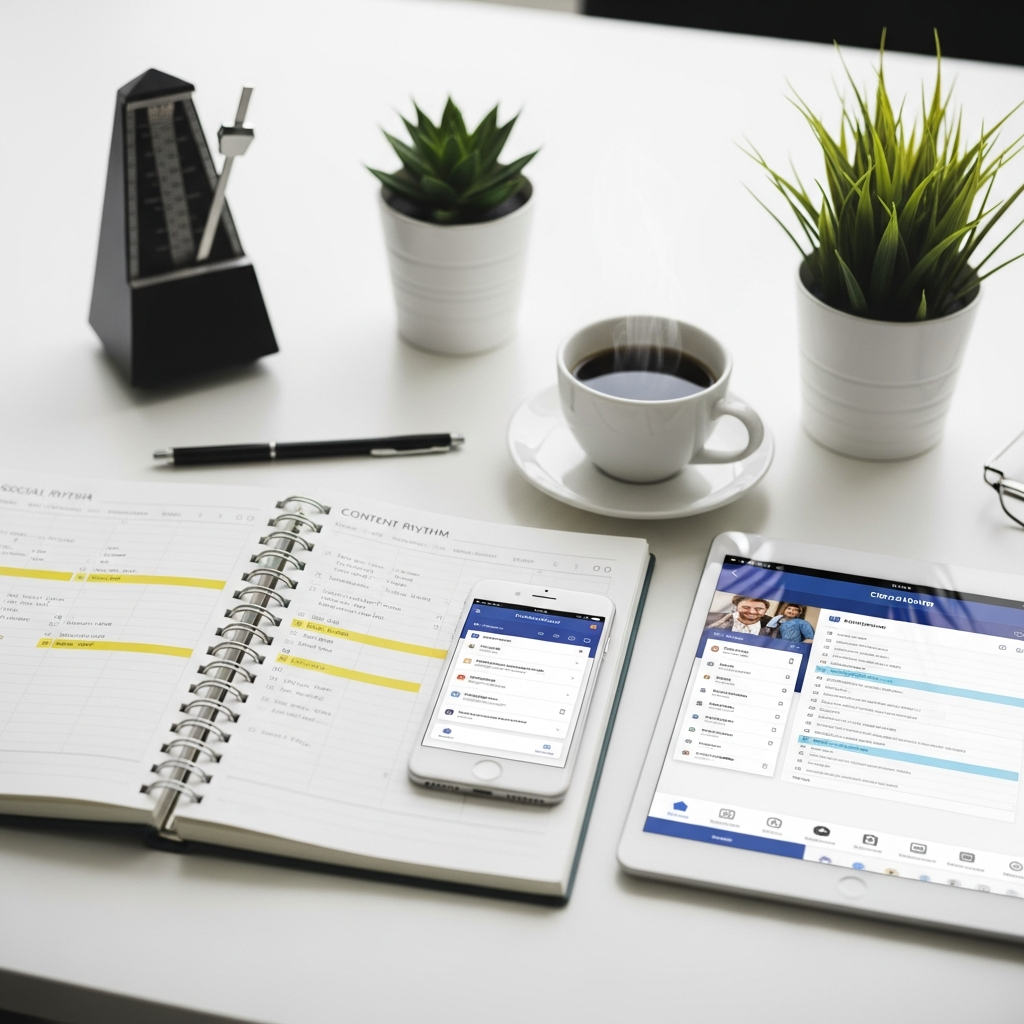
How to Build Posting Consistency You Can Actually Keep
TL;DR
Showing up regularly on social media matters far more than waiting for the perfect post, and a schedule you can actually sustain drives real growth.
- Pick a realistic cadence like two or three posts a week instead of overcommitting and burning out.
- Focus your energy on one or two platforms where your customers already gather, then expand later.
- A genuine, slightly imperfect post today beats a polished one that never gets published.
Why Consistency Beats Perfection on Social Media
Many small business owners stress about posting consistency and perfect content. They wait for the right photo or the cleverest caption. Meanwhile, weeks go by with silence on their channels.
However, here is the truth. Showing up regularly matters more than showing up flawlessly. Your audience wants to see you active and present.
Furthermore, a steady brand presence builds trust over time. People start to recognize your name and your voice. That familiarity and recognition turns them into customers.
In fact, when you chase perfection, you often post nothing at all. A good post today beats a perfect post that never happens. Progress always wins over polish.
Rewriting the same post for every channel eats your week. AutoMarketer AI adapts it and posts on autopilot.
Get Started Free →Ultimately, the goal is a rhythm you can actually maintain. That posting consistency becomes the backbone of your online growth. Everything else builds from there.
Meanwhile, perfectionism feels productive, but it quietly stalls your growth. Every day you delay posting consistency is a day your competitors stay visible while you stay hidden. The algorithm rewards activity, not flawless production values.
For example, think about the accounts you follow and enjoy. Chances are they feel human and slightly imperfect. A blurry phone photo with a genuine caption often outperforms a polished graphic that took hours to design.
Ultimately, your audience does not expect a magazine cover. They want to feel connected to a real person behind the business. Letting go of perfect frees you to actually show up.
Start Small With a Realistic Social Media Posting Schedule
However, the biggest mistake is starting too big. People promise themselves daily posts on five platforms. By week two, they burn out and quit.
Instead, begin with something you can sustain. Your posting consistency should match your real life. Be honest about your time and energy.
For example, try starting with three posts a week. Pick one or two platforms where your customers already spend time. Master those before adding more.
Additionally, here are a few gentle starting points to consider:
- Post twice a week on your strongest channel.
- Share one helpful tip and one behind the scenes update.
- Add a third post only when the first two feel easy.
- Repurpose one idea across different formats.
Ultimately, small wins build momentum. Once your routine feels natural, you can grow it. A schedule you keep beats an ambitious one you abandon.
However, not every platform deserves your energy. A local bakery might thrive on Instagram and Facebook, while a business consultant finds better traction on LinkedIn. Go where your customers already gather rather than spreading yourself thin. Spend a week observing where your audience is most active, and notice which platforms send people to your website or store. Doubling down on one strong channel beats a weak presence across four.
You can always expand later. Once your first platform feels automatic, adding a second one becomes far easier. Growth should feel like a natural next step, not a sudden leap.
Plan Your Content in Batches
Meanwhile, posting one piece at a time drains your energy fast. You stare at a blank screen every single day. That daily pressure leads to skipped posts.
Fortunately, batching solves this problem beautifully. Set aside one block of time to create several posts at once. Then you are covered for days or weeks.
Additionally, pick a content theme for each day of the week. This removes the guesswork from your social media posting schedule. You always know what comes next.
For example, consider building simple content buckets to draw from:
- Tips and how to advice for your customers.
- Stories about your team or your day.
- Customer questions you answer often.
- Promotions or new offerings.
Ultimately, batching turns marketing into a focused task. You finish it and move on with your day. That freedom is exactly what busy owners need.
First, to run a productive batching session, block ninety minutes on your calendar and treat it like a real appointment. Turn off notifications and gather everything you need before you start. The fewer interruptions, the more you will create.
Begin by listing ten quick ideas before writing a single full post. Brainstorming first keeps you from getting stuck halfway through. Once the ideas are down, drafting becomes much faster.
Additionally, capture inspiration throughout the week so you never start empty. Keep a notes app handy for customer questions, funny moments, and topic ideas. By the time your batching session arrives, you already have raw material to work with.
Let Automation Carry the Load
However, you did not start a business to spend hours posting online. Manual posting eats up time you do not have. This is where smart tools change everything.
For example, automation lets you schedule content in advance. You set it up once and it posts for you. Your social media posting schedule runs even while you sleep.
Furthermore, at AutoMarketer AI, our platform writes, schedules, and posts for you. One dashboard handles Facebook, Instagram, and X. No marketing degree required.
Ultimately, this kind of support levels the playing field. Small businesses can compete with bigger players. You get posting consistency without the constant effort.
Ultimately, the best part is the time you reclaim. You focus on running your business instead. The marketing keeps humming along on its own.
Therefore, when choosing an automation tool, look for these qualities:
- Simplicity from the first login, with a clean dashboard that shows your whole week at a glance. If it takes a manual to understand, it will likely gather dust.
- Strong scheduling features paired with flexibility, so you can pause, edit, or reschedule posts in seconds. A good system bends to your needs rather than locking you in.
- Reliable support and easy setup, because the faster you can get posts live, the sooner you see results.
- Writing alongside scheduling, since tools that handle both save you the most time of all.
Track What Works and Adjust
However, a rhythm is not set in stone. The best schedule grows with your business. You learn what your audience loves over time.
Meanwhile, pay attention to which posts get the most response. Notice the topics and formats that spark engagement. Then do more of what works.
You should also notice the quiet posts. If something flops repeatedly, let it go. Your time is too valuable to waste.
Additionally, review your social media posting schedule every month or two. Small tweaks keep your content fresh and relevant. This habit prevents your strategy from going stale.
Furthermore, keep these simple questions in mind as you review:
- Which posts earned the most comments or shares?
- What time of day got the best response?
- Which topics felt easy and fun to create?
- Where did your audience grow the fastest?
However, follower count looks impressive, but it rarely pays the bills. Focus instead on engagement, clicks, and messages that lead to real conversations. A small, active audience often beats a large, silent one. Watch your saves and shares closely too. When people save a post, they find it valuable enough to return to later, and when they share it, they are doing your marketing for you.
Meanwhile, give every change a fair trial before judging it. One slow week does not mean your posting consistency failed. Look for patterns over several weeks before making big decisions.
Build Habits That Stick for the Long Run
Ultimately, a great rhythm is really a great habit. Habits run on routine, not willpower. The easier you make it, the longer it lasts.
For example, tie your content work to something you already do. Maybe you plan posts every Monday morning with coffee. That anchor keeps the habit alive.
Additionally, forgive yourself when you miss a day. One gap will not undo your progress. Just pick up where you left off and continue.
Furthermore, lean on tools that remove the friction. When your social media posting schedule runs automatically, staying consistent gets simple. The system does the heavy lifting for you.
Growth on social media rarely happens overnight. The first few months can feel quiet, and that silence tempts many owners to quit. The ones who win are simply the ones who keep up their posting consistency.
Meanwhile, celebrate the small signals along the way. A new comment, a saved post, or a single message from a customer all prove your effort is working. These tiny wins keep the momentum alive.
Remember why you started in the first place. Every post built on posting consistency plants a seed that pays off later. Trust the process, lean on your tools, and let the compounding effect do its job.
Ready to build a posting rhythm you can finally keep? AutoMarketer AI handles the writing, scheduling, and posting for you. Reach out today and let us help you grow your online presence with ease.
Frequently Asked Questions
Why is consistency more important than perfection on social media?
Showing up regularly matters more than showing up flawlessly because your audience wants to see you active and present. When you chase perfection, you often post nothing at all, and a good post today beats a perfect post that never happens. A steady brand presence builds trust over time, helping people recognize your name and voice.
How often should I post when I am just starting out?
Begin with something you can realistically sustain, such as three posts a week. You can even start with twice a week on your strongest channel and add a third post only when the first two feel easy. Small wins build momentum, and a schedule you can keep beats an ambitious one you abandon.
How many platforms should I focus on?
You do not need to be everywhere. Pick one or two platforms where your customers already spend time and master those before adding more. Doubling down on one strong channel beats a weak presence across four.
How do I know which platforms my audience uses?
Spend a week observing where your audience is most active and notice which platforms send people to your website or store. A local bakery might thrive on Instagram and Facebook, while a business consultant finds better traction on LinkedIn. Go where your customers already gather rather than spreading yourself thin.
Does my content need to look professional and polished to perform well?
No, your audience does not expect a magazine cover. A blurry phone photo with a genuine caption often outperforms a polished graphic that took hours to design. People want to feel connected to a real person behind the business, so letting go of perfect frees you to actually show up.
What is the biggest mistake people make with posting consistency?
The biggest mistake is starting too big by promising daily posts across five platforms, which often leads to burnout and quitting by week two. Perfectionism feels productive but quietly stalls your growth, and every day you delay is a day your competitors stay visible while you stay hidden. Instead, build a rhythm that matches your real life and energy.
Leave a Comment
Your email will not be published or shared. We use it only to follow up if needed.