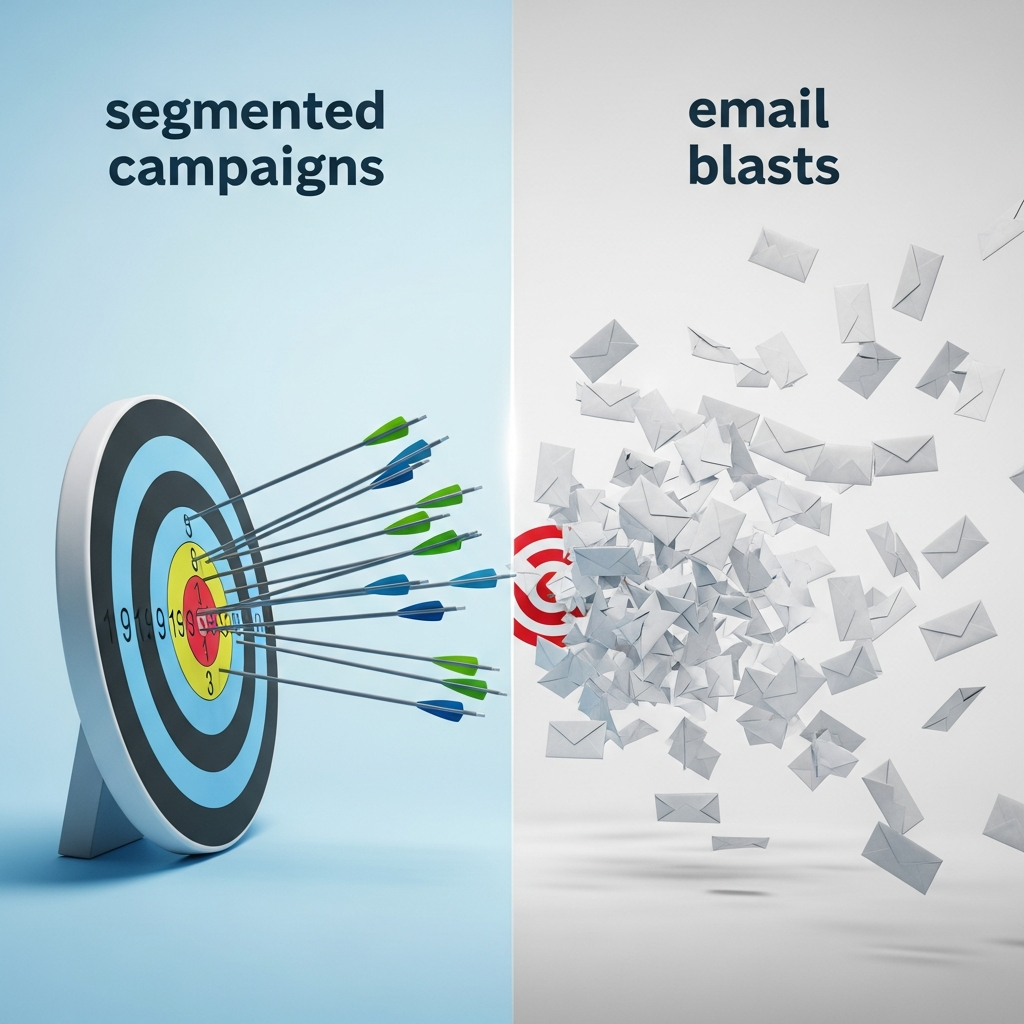
Segmented Email Campaigns vs Blasts: Why Targeting Wins
TL;DR
Splitting your email list into small, relevant groups earns better open and click rates than sending one generic blast to everyone.
- Group subscribers by where they are in their journey, such as new signups, repeat buyers, and quiet contacts, so each message fits.
- Start simple by splitting new versus returning customers, then keep your groups few and manageable to avoid confusion.
- AutoMarketer AI sends a weekly newsletter from your recent posts, manages sign-ups and unsubscribes, and sends re-engagement emails to win back quiet subscribers.
What Email Segmentation Really Means
When you weigh segmented email campaigns vs blasts, the concept of email segmentation is simple at its heart. You split your subscriber list into smaller groups, then send each group a message that fits them. Instead of one broad announcement, you tailor the tone, the offer, and the timing to match where each person sits in their relationship with your business.
A one-size blast treats everyone the same. But your customers are not the same. Some just signed up an hour ago and barely know your name. Others have bought from you for years and already trust your recommendations. Sending both the same email ignores that gap, and it is one of the clearest reasons to think about segmented email campaigns vs blasts.
When you group people well, your emails feel personal. Readers see content that matches their needs, so they keep opening, keep clicking, and keep trusting you. That trust compounds over time and turns a mailing list into a genuine audience.
Think of it like talking to friends. You would not tell every friend the same story in the same words. You adjust based on what they care about and what they already know. That is the core idea behind segmented email campaigns vs blasts, since it lets you speak to the right people with the right message rather than shouting one line at everyone.
Winning back quiet subscribers starts with the right message, so let AutoMarketer AI send re-engagement emails that pull inactive customers back from your recent content.
Learn more →Why One-Size Blasts Fall Flat
A single email to your whole list sounds efficient. It saves time and feels like less work. But it often misses the mark for most readers because it cannot speak to any one situation clearly.
New subscribers do not need a loyalty reward yet, since they have not earned or understood it. Longtime buyers do not need a welcome message, because they already know exactly who you are. A blast ignores these differences completely and asks one email to do several jobs at once.
When messages feel irrelevant, people tune out. Some quietly stop opening your emails. Others hit unsubscribe and never come back. A few mark it as spam, which can slowly damage how reliably your future emails even reach inboxes.
You lose more than a click. You lose a relationship you worked hard to build, sometimes over months of good content and careful trust. That is a steep price for a shortcut that only saved you a few minutes.
One broad message rarely lands with everyone. It waters down what makes your offer special, because it has to stay generic enough to fit every reader. This is why the debate over segmented email campaigns vs blasts matters, since focused emails almost always work better when each one can say something that actually matters to the person reading it.
The Real Benefits of Email Segmentation
Segmented campaigns tend to earn stronger results. Open rates climb when the subject line feels relevant to that exact reader. Clicks follow when the content inside matches the interest that got them to open in the first place.
Your subscribers feel understood. That feeling turns casual readers into loyal customers, and loyalty means repeat sales down the road. A customer who feels seen is far more likely to buy again than one who feels like a name on a spreadsheet.
Here are a few common ways small businesses group their lists:
Common Ways to Group Your List
New subscribers who just signed up and need a warm introduction to what you offer. Repeat customers who buy often and respond well to fresh products or early access. Quiet subscribers who have gone silent and need a reason to come back. People who left items in their cart and may just need a small reminder. Fans of a specific product or category who want more of what they already love.
Each group gets a message built for them. A cart reminder speaks to hesitation, while a re-engagement note speaks to absence. That focus lifts engagement across your whole list. When you think about segmented email campaigns vs blasts, email segmentation makes every send count because no email is wasted on the wrong audience.
How to Start Segmenting Your List
You do not need a huge list to begin. Even a few smart groups help. Start with the divisions that matter most to your business rather than trying to slice your list a dozen ways on day one.
Begin with new versus returning customers. That single split already sharpens your message. New folks get a warm welcome that explains who you are and what to expect. Returning folks get something fresh, like a new arrival or a thank-you that acknowledges their history with you.
Next, look at behavior. Who opens every email? Who has gone quiet for weeks or months? Email segmentation lets you treat each group with care, rewarding your most engaged readers while gently reaching out to the ones drifting away.
Keep your groups clear and manageable. Too many segments get confusing fast, and you end up spending more time sorting than sending. A handful of well-chosen groups beats dozens of tiny ones you cannot keep track of.
How AutoMarketer AI Supports Your Email Efforts
AutoMarketer AI helps you keep your email work simple. It sends a weekly newsletter built from your recent posts, so your audience stays in the loop without you writing something new from scratch each week.
It also manages your subscribers, sign-ups, and unsubscribes, so your list stays clean and current. You spend less time on housekeeping and more time thinking about what to say to each group.
For quiet subscribers, it sends re-engagement emails aimed at winning back people who drifted away. This directly supports smart email segmentation, since your silent group is often the hardest one to reach with a general message.
If you run a connected WooCommerce store, it sends abandoned-cart recovery emails. Customers who leave items behind get a gentle nudge, which helps you recover sales that would otherwise slip away. It can also send abandoned-cart reminders by text message when you have connected an SMS provider such as Twilio or Sinch with your own credentials.
You also choose which provider sends your email. That gives you control over how your messages go out and keeps the tool working around your existing setup rather than forcing you into a new one.
Putting Email Segmentation to Work Today
Segmented campaigns are not just for big brands. Small businesses gain the most from focused messages, because every subscriber matters when your list is lean and each relationship carries more weight. When you compare segmented email campaigns vs blasts, that extra weight is exactly why the focused approach pays off.
Start small and build from there. Split new and returning customers first, then add a group for quiet subscribers you want back. Once those feel steady, you can add a cart group or a product-fan group as you grow more comfortable.
Watch how each group responds over time. Note which subject lines earn opens and which offers earn clicks, then adjust your messages as you learn. Email segmentation gets stronger the more you use it, because every send teaches you something about your audience, and that is the real edge in segmented email campaigns vs blasts.
The payoff is real. Better opens, more clicks, and happier customers who feel like you are speaking to them directly. Your emails start working harder for your business instead of blending into a crowded inbox.
Want to make your email marketing easier? Reach out to learn how AutoMarketer AI can help you connect with your subscribers. Get in touch today and take the next step.
Frequently Asked Questions
What is email segmentation and why does it matter?
Email segmentation means splitting your subscriber list into smaller groups so each group gets a message that fits them. It matters because your customers are not the same, and relevant emails feel personal and build trust over time. This tends to lift open rates and clicks compared to sending everyone the same message.
Why do one-size email blasts often fall flat?
A single email to your whole list treats everyone the same, so it misses the mark for most readers. New subscribers do not need a loyalty reward yet, and longtime buyers do not need a welcome message. When messages feel irrelevant, people tune out, stop opening, or unsubscribe.
What are common ways small businesses group their email lists?
Common groups include new subscribers who just signed up, repeat customers who buy often, and quiet subscribers who have gone silent. You can also group people who left items in their cart or fans of a specific product or category. Each group gets a message built for them, which lifts engagement across your whole list.
How should I start segmenting my email list?
You do not need a huge list to begin, and even a few smart groups help. Start with new versus returning customers, then look at behavior like who opens every email and who has gone quiet. Keep your groups clear and manageable, since a handful of well-chosen groups beats dozens of tiny ones.
How does AutoMarketer AI support my email efforts?
AutoMarketer AI sends a weekly newsletter built from your recent posts to keep your audience in the loop. It also manages your subscribers, sign-ups, and unsubscribes so your list stays clean and current. This means you spend less time on list housekeeping.
Can AutoMarketer AI help win back quiet subscribers?
Yes. AutoMarketer AI sends re-engagement emails aimed at winning back people who have drifted away. This supports smart email work by giving attention to subscribers who have gone silent.
Leave a Comment
Your email will not be published or shared. We use it only to follow up if needed.