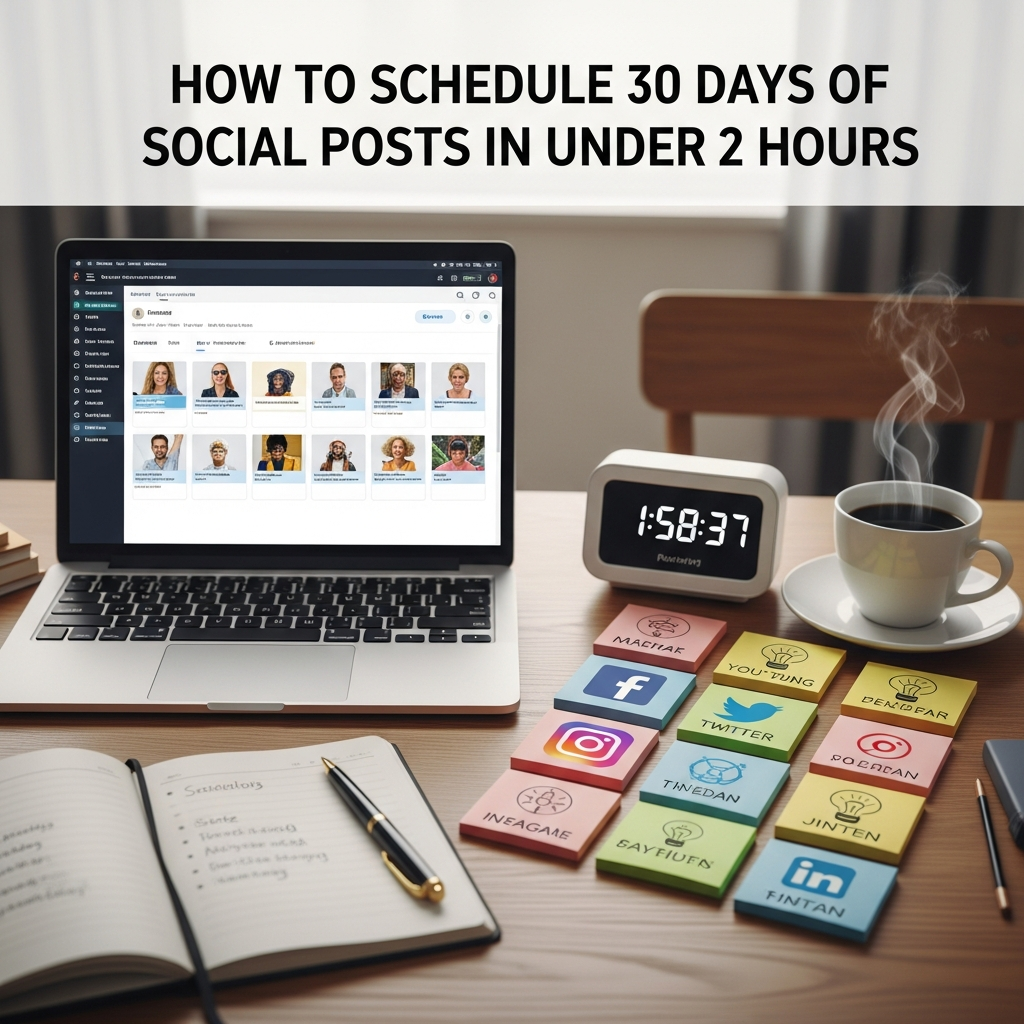
Content Scheduling: 30 Days of Social Posts in 2 Hours
Why Social Media Scheduling Saves Time and Sanity
small business resources wear countless hats every single day while juggling content scheduling among many other responsibilities. Adding consistent social media usage data to that list feels overwhelming. Social media scheduling becomes your secret weapon for maintaining an active online presence. You won’t need to sacrifice precious hours each week.
Content scheduling your posts in advance eliminates the daily scramble to create content. Instead of wondering what to post today, you can plan entire campaigns weeks ahead. This strategic approach helps you maintain consistency, which social platforms reward with better visibility.
The mental relief alone makes content scheduling worthwhile. No more 9 PM panic sessions trying to think of something clever to post. When you batch your content creation and use scheduling tools, you transform chaos into calm.
Smart content scheduling doesn’t replace your personal touch. It amplifies it by ensuring your voice reaches your audience consistently. You still craft the message and choose the timing. Scheduling simply handles the repetitive task of posting at optimal times.
Many small business owners underestimate the true cost of managing social media without content scheduling. Inconsistent posting creates missed opportunities for customer engagement and brand visibility. When you post randomly or skip days entirely, your audience begins to forget about your business.
Random posting often means missing your peak audience hours entirely. Your content gets buried in feeds when fewer people are online. Emergency posting creates stress and leads to rushed, low-quality content.
Inconsistent posting also hurts your relationship with how algorithms work. Platforms like Instagram and Facebook favor accounts that post regularly and generate steady engagement. Erratic content scheduling causes these algorithms to show your content to fewer people. This reduces your organic reach significantly.
The Power of Batch Content Creation
Batch creation revolutionizes how you approach social media content. Instead of creating one post at a time, you dedicate focused blocks to produce multiple pieces simultaneously. This method taps into your creative flow state, where ideas build upon each other naturally.
Start by choosing specific themes for each week or month. Maybe Mondays feature customer spotlights, Wednesdays share industry tips, and Fridays celebrate team achievements. Having these content pillars guides your creation process and ensures variety while maintaining structure.
Gather all your resources before you begin your batch creation session. Collect product photos, customer testimonials, industry articles, and company updates in one place. Having everything accessible prevents interruptions that break your creative momentum.
Set up dedicated content creation sessions in your calendar, treating them as important business meetings. Choose a quiet time when you won’t be interrupted by customers or urgent tasks. Block out 2-3 hour chunks rather than trying to create content in small fragments.
Effective batch creation techniques include:
- Use content prompts to jumpstart your creativity during batch sessions. Questions like “What problem did we solve for a customer this week?” or “What industry trend should our customers know about?” can generate multiple post ideas quickly
- Create content in phases during your batch sessions. First, brainstorm all your topics and write headlines. Then, draft the copy for each post. Finally, select or create visuals to accompany each message
- Use this assembly-line approach to prevent the overwhelm of trying to complete each post from start to finish
Essential Tools and Templates for Quick Social Media Scheduling
The right content scheduling platform transforms your social media workflow from chaotic to streamlined. Look for tools that support multiple platforms simultaneously, offer visual calendar views, and provide analytics to track performance. Popular options include Buffer, Hootsuite, Later, and Sprout Social for different business needs.
Buffer excels at simple scheduling with a clean interface and affordable pricing tiers. Hootsuite offers comprehensive monitoring features and team collaboration tools. Later specializes in visual content planning with drag-and-drop calendar functionality. Sprout Social provides detailed analytics and customer relationship management features.
Content templates accelerate your creation process significantly. Develop standard formats for different post types like product announcements, behind-the-scenes content, educational tips, and customer features. Templates ensure consistency while providing structure that speeds up writing.
Create templates for Monday motivation posts, Wednesday wisdom shares, and Friday feature spotlights. Include specific elements like compelling headlines, call-to-action phrases, and hashtag groups. Product announcement templates should feature benefit statements, pricing details, and purchase links.
Visual consistency matters as much as your written content. Create branded templates for graphics, establish color schemes, and maintain consistent fonts across platforms. Many scheduling tools integrate with design platforms, letting you create and schedule visual content from one dashboard.
Timing Strategies That Maximize Engagement
Understanding when your audience is most active online dramatically improves your social media performance. Most content scheduling tools provide insights about your followers’ activity patterns. These tools show peak engagement hours and days. Use this data to schedule your most important posts when the maximum number of people will see them organically.
Platform analytics reveal when your specific audience scrolls through their feeds most frequently. Instagram Insights shows hourly activity patterns for your followers throughout the week. Facebook Page Insights displays peak online times with detailed breakdowns by day. Monitor these patterns monthly since audience behavior can shift with seasons and events.
Different platforms have different optimal posting times. LinkedIn tends to perform better during business hours and weekdays. Instagram and Facebook often see higher engagement during evenings and weekends. Test different time slots and track the results to find your unique optimal posting schedule.
B2B companies typically see better LinkedIn engagement between 8 AM and 10 AM. Consumer brands often perform well on Instagram between 6 PM and 9 PM. Facebook engagement peaks around lunchtime and evening hours for most audiences.
Consider time zones if your business serves customers across different regions. Schedule multiple versions of important posts to reach audiences in various locations during their peak activity hours. This strategy is particularly important for businesses with national or international customer bases.
Your 30-Day Content Calendar Blueprint
Creating a month-long content calendar starts with understanding your business cycles and seasonal trends. Map out important dates like product launches, sales periods, holidays, and industry events. These anchor points provide structure for your content planning and ensure you never miss important promotional opportunities.
Divide your monthly content into weekly themes that align with your business goals. Week one might focus on education and industry insights. Week two could highlight customer success stories. Week three might showcase your team and company culture. Week four could emphasize your products or services directly.
Plan for different content formats throughout the month to maintain audience interest. Mix educational posts with entertaining content, combine photos with videos, and balance promotional messages with value-driven information. Variety prevents your feed from becoming repetitive while appealing to different audience preferences.
Start each month by reviewing your business calendar for upcoming events, promotions, or product launches. These milestone moments should anchor your content calendar and receive prominent placement during high-engagement time slots.
Monthly planning best practices include:
- Allocate approximately 80% of your scheduled content to valuable, non-promotional posts and reserve 20% for direct sales messages
- Educational content, industry news, behind-the-scenes glimpses, and customer spotlights should form the foundation of your content calendar
- Leave some flexibility in your calendar for timely responses to industry news or trending topics
- Reserve 10-15% of your content scheduling slots for spontaneous posts that capitalize on current events or viral trends relevant to your industry
Leave a Comment